|
|
|
|
|


|
|
The ritual is the basic feature
of the civilization and religions of India, so it is difficult to find out
the extent of its influence on Hinduism, Jainism and Buddhism which are the
religions originated in India. Ritual activity is physical activity and is
therefore primarily related to the body unlike thinking or believing, which
are mainly connected with the mind. Ritual affiliation is therefore
determined by birth, and not by choice or preference. Most
of the Vedic rituals were primarily dedicated to Agni (fire- as God) and
Soma. Agni was considerd as a God, divine messenger and intermediary .The
offerings, primarily of clarified butter (ghee) were poured into Sacrificial
fires installed on altars, and Agni transmitted them to the gods. Special libations
were made of juice extracted from the stacks of the soma plant. Remnants of
the offerings were consumed by the celebrants. The Ceremonies were
accompanied by recitations from the Rgveda and chants from the Samaveda. It
is belived that pressed juices unaccompanied by sacred hymns have no effect.
The celebrations required the execution of multifarious activities
distributed among priests from different Vedas, who officiated on behalf of,
and for the benefit of a ritual patron, the Yajamana One
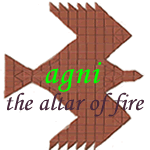
of the most elaborate of these Ceremonies was called Agnicayana, the
"piling of Agni", or, simply, Agni. This ritual originated around
1000 BC. During its performance, a large altar in the shape of a bird,
dedicated to Agni and itself also called Agni, was piled from more than a
thousand bricks. |
|
|
|
|


|
|
|
|
|
|
|
Copyright
2001 © Comp & Wilton Technologies |
|